 Hundred MS
Home / Blog / Cash basis vs accrual accounting
Cash basis vs accrual accounting: which one should you use?

 Stuck on this in your own books?
Bring it to a free 30-minute call with Narek. No pitch.
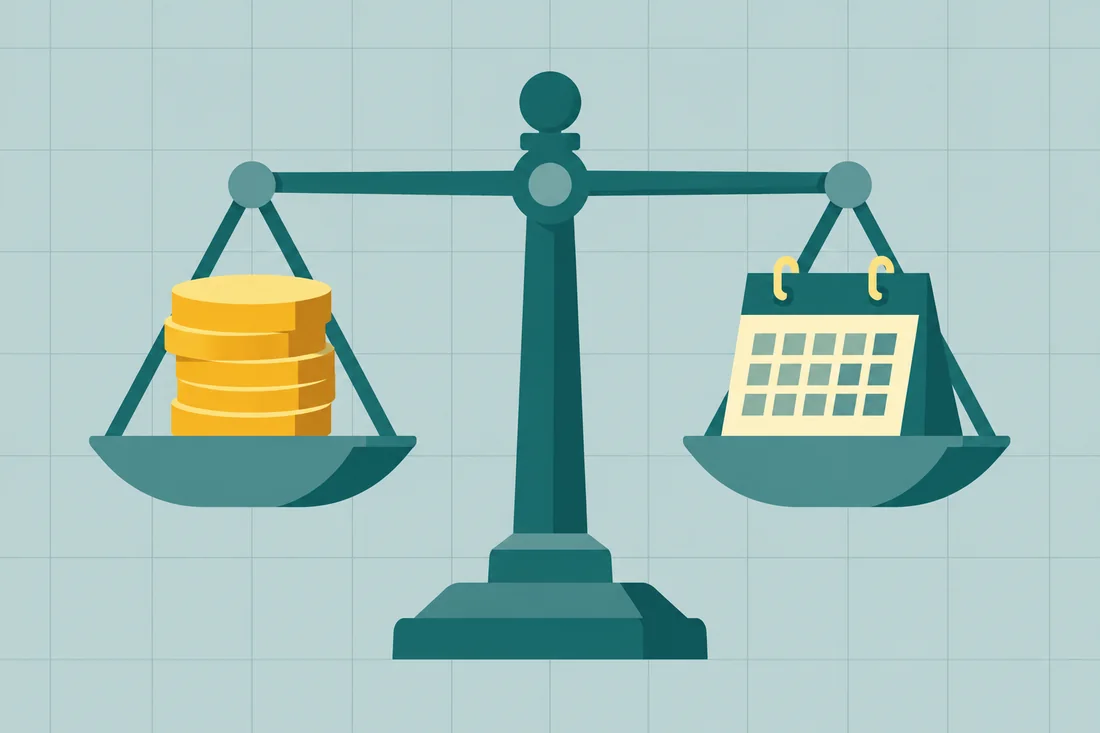
Book a callCash basis records income when money arrives and costs when money leaves. Accrual records income when it is earned and costs when they are incurred, whatever the payment date. Cash basis is simpler and fine for very small businesses. Accrual shows the real performance of the month, and it is what US accounting standards (GAAP), lenders and investors expect.
- Cash basis follows the bank. Accrual follows the work.
- Accrual is what US accounting standards, lenders and investors expect.
- You can keep accrual books and still watch cash closely with a forecast.
The difference in one example
In March you finish a project and send an invoice for $10,000. The customer pays in April. In March you also receive a $3,000 bill from a contractor, which you pay in April. The figures are an example only.
| Item | Cash basis | Accrual |
|---|---|---|
| March income | $0 | $10,000 |
| March costs | $0 | $3,000 |
| March profit | $0 | $7,000 |
| April profit | $7,000 | $0 |
Same business, same total. Cash basis says March was empty and April was great. Accrual says the work and the profit happened in March. If you are deciding whether March went well, only one of these answers the question.
Side by side
| Item | Cash basis | Accrual |
|---|---|---|
| Income is recorded | When the money arrives | When it is earned |
| Costs are recorded | When the money leaves | When they are incurred |
| Shows receivables and payables | No | Yes |
| Effort | Low | Higher: needs a real month-end close |
| Good for | Very small, simple businesses | Growing companies, inventory, contracts, anyone raising money |
| Accepted under US GAAP | No | Yes |
Did your profit swing sharply last quarter for a reason you cannot explain with anything that happened in the business? That is usually cash-basis timing, not performance.
Who can use which
In the US, the tax rules let many small businesses choose cash basis. The main limit applies to C corporations and to partnerships that have a C corporation as a partner. Once their average yearly gross receipts over the previous three tax years pass a threshold, they must use accrual for tax: $31 million for tax years beginning in 2025 and $32 million for 2026. The figure is adjusted for inflation every year. Tax shelters cannot use cash basis at all, and some types of business have their own rules. Check your own case with your tax adviser.
Tax is only half of it. Banks, investors and auditors expect accrual statements. If anyone outside the company will read your numbers, plan for accrual.
Keep the books on accrual and still manage cash closely. Accrual tells you whether the business is profitable. A cash forecast tells you whether you can pay wages next month. You need both, and one does not replace the other.
When to switch to accrual
- Customers pay upfront for work you deliver over months.
- You hold inventory.
- You are about to raise money, borrow, or be audited.
- Profit swings wildly from month to month for no business reason.
- You approach the tax threshold.
How to switch without breaking the books
- Pick a clean start date, ideally the first day of a fiscal year.
- List what is open on that date: unpaid customer invoices, unpaid bills, prepaid costs, deposits from customers, accrued wages.
- Post them as opening balances, with support for each.
- Ask your tax adviser about the filing that a change of method needs. In the US this is normally a formal request to the IRS on Form 3115.
- Start a monthly close, because accrual only works if someone reviews these balances every month.
Where this goes wrong
| The problem | What it costs you | The fix |
|---|---|---|
| Cash-basis profit is read as performance | A good month looks bad, or the other way around | Judge performance on accrual numbers |
| The switch happens in the middle of a year | Two methods in one set of reports | Switch on the first day of a fiscal year |
| Accrual books with no monthly close | Receivables, payables and accruals drift away from reality | Review those balances every month |
We keep accrual books and run a monthly close for our clients, so we see both views of the same business every month.
Sources we opened and checked for this guide:
First published 2023. Rewritten and checked in September 2026. If something here is out of date, tell us and we will fix it.


 David Tarkhanyan